Posts by Xiangpeng Wan, page 2

The Money European Companies Pay American Firms Every Year Is the Opportunity for Founders Going Abroad

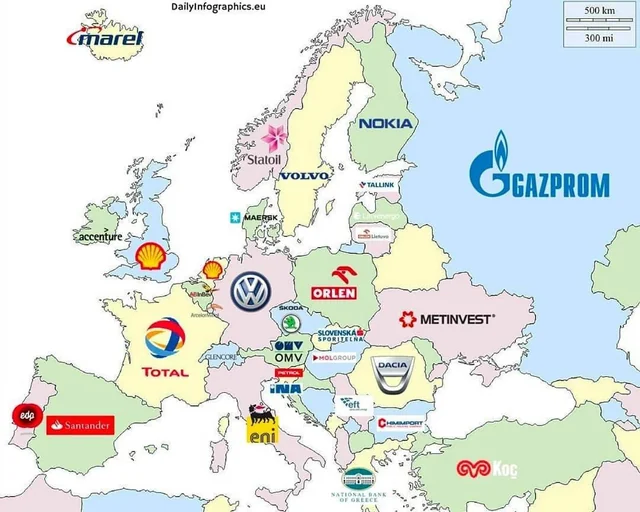
When a Chinese company first came to London to build an enterprise business, it hired a batch of local salespeople for the relationships they held. It didn't amount to much, and the hires were let go one after another. The real turning point was a model release: the model broke into the mainstream, and companies large and small came to them asking about partnerships. "The market here in Europe isn't entirely relationship-driven; it's more value-driven," said a friend who works on enterprise clients at a big tech company. Europe has plenty of traditional enterprises that, for reasons of technology and talent, have long been buyers of services, paying American tech companies a large sum every year. Anthropic built a major office in London, and the French model company Mistral pivoted to enterprise and government clients and grew revenue nearly twentyfold in a year; they all came for this business. His advice to me was just one line: first build a product or feature that can break through, then go after enterprise clients. It will be much easier.

The Money European Companies Pay American Firms Every Year Is the Opportunity for Founders Going Abroad

After Ten Years at Google, He Decided to Go Start Something

Huang graduated from Peking University in 2014 and joined Google, landing in London because of visa timing. It was the golden age of big-tech food: sushi every day in the cafeteria, and grilled steak, pork chops, and lamb chops in the evening, sometimes even venison. Ten years later he left and started a company. The first direction was an AI version of TikTok, with everything generated by AI; they worked on it for a while and gave up, because they didn't believe anyone would actually use it. Then in early 2026 a product called moltbook had its moment doing the same thing. The team is small now: after AI arrived, the company trimmed a lot of people, interns especially, because if someone can't own a piece of work end to end, the friction of communicating with them isn't worth it compared to just using AI. When I asked him what mattered most in two years of building, he said it's the team's end-to-end response speed: find a problem in the morning, propose a fix at noon, ship it in the afternoon, then immediately collect real user feedback, a full product loop closed in a single day.
After Ten Years at Google, He Decided to Go Start Something

KPMG Cut Four Hundred Assistant Managers. Amy Decided to Become the Auditor Who Works Best with AI

A text-based reconciliation used to take Amy three days; Excel couldn't handle it, so someone had to check it line by line. This year the job went to the company's Copilot: ten minutes to finish, plus an hour of her review. KPMG next door cut four hundred assistant managers this year, and senior leadership said in a meeting that by 2030 all workpapers and testing will be done by AI, with junior staff becoming AI operators. Amy doesn't think this is all bad news: feeling the pressure is a good thing; what's truly bad is a company that isn't using AI at all, leaving you to repeat the same work day after day. Her advice to herself: stay at the table, and become the employee in audit and compliance who collaborates with AI best.

KPMG Cut Four Hundred Assistant Managers. Amy Decided to Become the Auditor Who Works Best with AI

Salesforce Offered Him Another 150k to Stay. He Said: This Is Not My Ceiling

The day he left Salesforce, the company offered Zheng Qian another 150k raise to keep him. He left anyway, saying the salary was about as high as it goes in London, but that was not his ceiling. Born in 1995, he is building a new company with the same engineers who were acquired alongside him: the market said no to his product twice, and he added one layer, then another, before customers finally paid. Emails converted at nearly zero, so he hired people to make ten thousand cold calls. His outsourced sales team was so won over by the vision that they took pay cuts to join. Ideas, he says, rank behind conviction and team; a brilliant idea is not the starting point of a startup, it is a byproduct.

Salesforce Offered Him Another 150k to Stay. He Said: This Is Not My Ceiling

The Moment Her Life Truly Turned Around, Nothing About Her Situation Had Changed

A failed startup, failed investments, failed research, failed PhD applications. Yue says her world felt like a black swamp dragging her down. Yet the moment her life truly turned around, nothing had changed: the fracture hadn't healed, the offer hadn't come, New York was still muggy. I asked her how she did it. She smiled and said: maybe because I have failed too many times. Today she is a fully funded AI PhD student at Imperial College London, part of the first Asian team to exhibit at the Louvre and the British Museum, and she calls herself a super player.

The Moment Her Life Truly Turned Around, Nothing About Her Situation Had Changed

He Left Investment Banking to Start a Company, and Chose Not to Build a Workplace AI Assistant

He led an AI team at an investment bank, but most of the products died in compliance review. When Zac quit to start his own company, he avoided the white-collar market of document writing, customer service, and coding assistants: that market may end up swallowed by OpenAI and Anthropic. He chose construction instead. When a site stalls for a day, workers still clock in, equipment rentals still run, and money still burns. The messy data scattered across paper, Excel, and phone calls is both the barrier to entry and his moat.

He Left Investment Banking to Start a Company, and Chose Not to Build a Workplace AI Assistant

I Found Something More Fun Than Gaming

A gaming addict who failed several courses in his sophomore year and nearly got expelled, barely reaching 1900 on the Dota ladder. Ten years later, he turned down a postdoc offer from a top American university and invitations from leading AI labs to start his own company. One of the earliest LLM-based multi-agent open source frameworks, its core code written in a single night. He says agent research was the first time he found something more fun than gaming.

I Found Something More Fun Than Gaming